Combination Immunotherapy of Glioblastoma with Dendritic Cell Cancer Vaccines, Anti-PD-1 and Poly I:C: A Case Report
A joint research team from Xijing Hospital's Department of Clinical Immunology and Neurosurgery, the National Molecular Medicine Translational Center and Department of Cell Biology at Air Force Medical University, tricision Biologics, Johns Hopkins University School of Medicine's Department of Pharmacology and Molecular Sciences, and Duke University Medical Center's Department of Immunology has published a preprint paper titled Combination Immunotherapy of Glioblastoma with Dendritic Cell Cancer Vaccines, Anti-PD-1 and Poly I:C: A Case Report.
The study represents the first global report of a combination immunotherapy regimen—mRNA-DC vaccine, anti-PD-1, and poly I:C—for treating stage IV GBM, achieving its prespecified goal of "maximizing the probability of cure." The patient's >5-year progression-free survival is a remarkably encouraging outcome.The study employed a novel TriVac technology to modify mRNA-encoded tumor antigens, demonstrating a key advantage of mRNA platforms over peptide-based vaccines. Clinically, TriVac-modified mRNA exhibited a favorable safety profile and elicited robust tumor-specific CD4+ and CD8+ T-cell responses. These findings confirm that the combination immunotherapy can be administered long-term with verified safety and efficacy, providing a new clinical strategy and empirical support for treating this highly malignant disease.
The investigational mRNA-DC vaccine was developed by tricision Biologics. On October 18 of this year, the China National Medical Products Administration (NMPA) Center for Drug Evaluation (CDE) accepted its clinical trial application (CTA)—the first such filing in China for a GBM-targeting mRNA-DC cell vaccine—offering new hope for patients with this devastating disease.
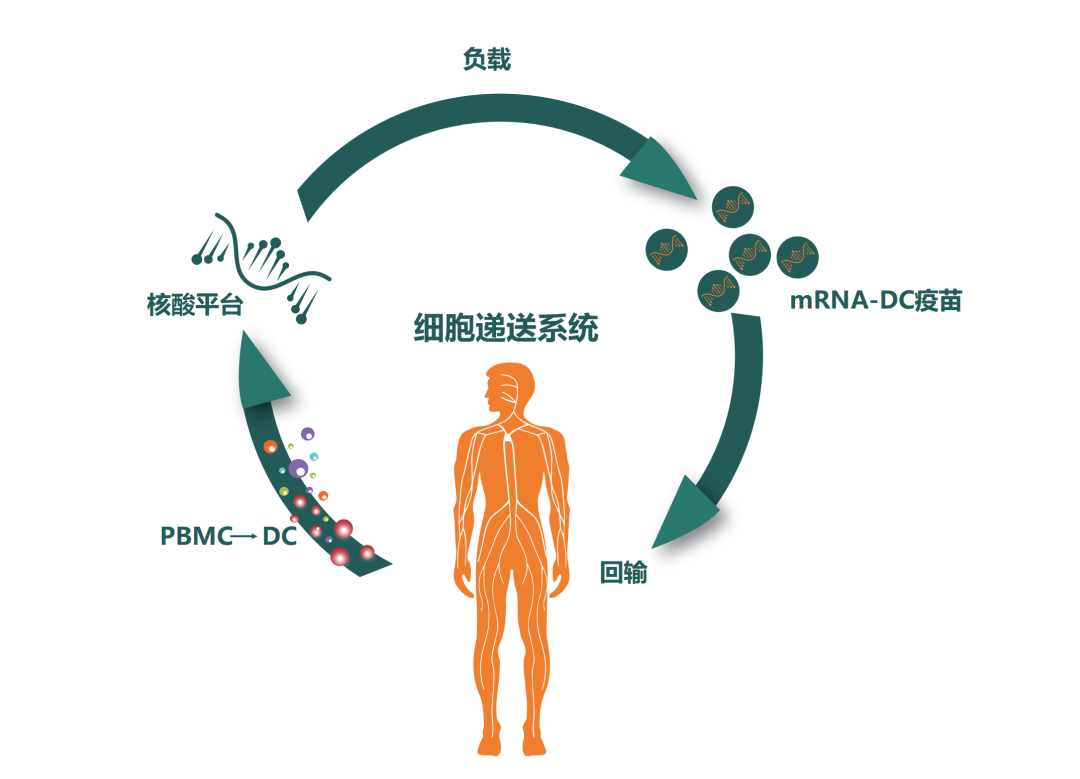
GBM is the most common primary malignant
tumor of the central nervous system (CNS) and, given its extreme
aggressiveness, has been dubbed the "new king of cancers." According
to China's National Guidelines for the Diagnosis and Treatment of
Glioma (2022 Edition), the annual incidence of glioma in China is 5–8 per
100,000, with a very high 5-year mortality rate and high recurrence within the
first postoperative year. As a glioma subtype, GBM accounts for approximately
80% of all CNS malignancies, and its global incidence continues to rise.
Therapeutic advances have been limited, and patient survival remains dismal,
with a median overall survival of just 13.5 months—making it one of the most
challenging conditions in neurosurgery.
DC-based mRNA tumor vaccines represent a
highly promising therapeutic approach for GBM. DCs are the most potent
antigen-presenting cells (APCs) in vivo and serve as the initiators of specific
immune responses. They efficiently uptake, process, and present antigens and
are the only professional APCs capable of activating naïve T cells, placing
them at the center of the immune response cascade—hence their broad application
in cancer therapy.
In this clinical study, patient-derived
autologous DCs were loaded with multiple forms of tumor antigens, including
mRNA-encoding TAAs, mRNA-encoding neoantigens, and hypochlorous-acid-oxidized
tumor lysates, and then combined with other immunotherapeutic
agents—specifically an anti-PD-1 antibody (nivolumab) and the immunoadjuvant
poly I:C—to further enhance antitumor activity.
Although a prior phase III study evaluated nivolumab plus chemoradiotherapy in GBM and failed to meet its overall survival (OS) endpoint, the present combination was rationally designed: mature DCs upregulate PD-L1 and PD-L2, and while poly I:C activates immune responses, it also stimulates PD-L1/PD-L2 expression on GBM tumor cells. Thus, combining the mRNA-DC vaccine with anti-PD-1 was considered necessary to block inhibitory signals delivered to T lymphocytes via PD-L1/PD-L2 on both mature DCs and GBM cells. This represents an innovative combination immunotherapy strategy not previously reported.
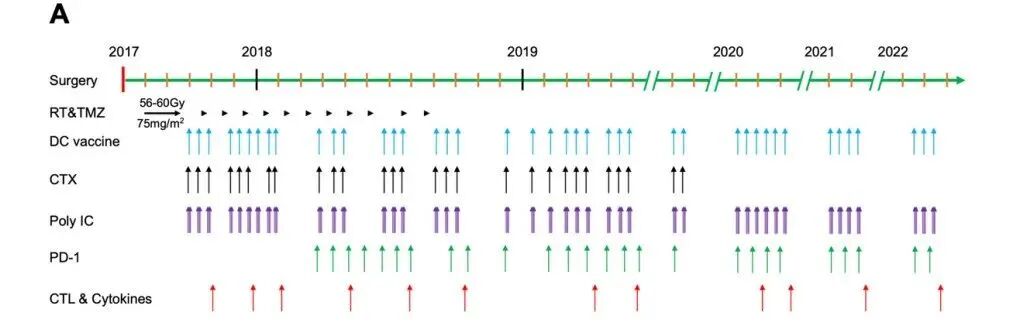
The patient's treatment spanned from July
2017 to September 2022—over 5 years—and included 42 mRNA-DC vaccine
administrations (each followed by three poly I:C doses), along with
anti-PD-1 antibody and low-dose cyclophosphamide (to deplete regulatory T
cells). Clinical results demonstrated that the integrated immunotherapy
induced potent antitumor CD4+ and CD8+ T-cell responses, with no
immunotherapy-related adverse events observed throughout the entire
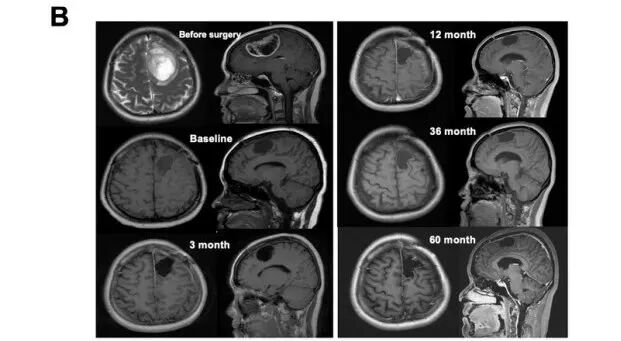
treatment period. The most recent MRI scan (July 21, 2022) showed no
signs of recurrence.
These results indicate that the combination immunotherapy, when integrated into standard chemoradiotherapy, is both safe and effective for long-term GBM management.
Of particular note, beyond being the first
global application of this triple combination in GBM, the study also employed
a novel TriVac technology for functional modification of tumor
antigens. Developed by scientists at Duke and Johns Hopkins, TriVac fuses tumor
antigens with a destabilizing domain (DD) while simultaneously inserting the
antigen into full-length lysosome-associated membrane glycoprotein 1 (LAMP-1)
to enhance major histocompatibility complex (MHC) class I and class II antigen
presentation, respectively.
Seven TAAs were
evaluated. In the first treatment phase, five TAAs (SOX11, PIM1, SP17, SOX3,
and CSPG4) without TriVac modification induced relatively weak
antigen-specific T-cell responses. In the second phase, after TriVac
modification, these same antigens elicited markedly enhanced antigen-specific
T-cell responses. The other two TAAs (MTFR2 and ADAMTSL1) were TriVac-modified
from the outset in the second phase and induced very strong antitumor
T-cell responses. These findings highlight the prominent contribution of
TriVac technology in this trial.
Another key insight concerns the practical
application of mRNA-encoded TAAs in antitumor therapy. To maximize the
probability of cure, the study loaded autologous DCs with three types
of tumor antigens—mRNA-TAAs, mRNA-neoantigens, and
hypochlorous-acid-oxidized lysates—which are highly complementary in their
vaccine effects. Oxidized lysates enhance immunogenicity, but their use is
limited by the difficulty of obtaining sufficient quantities from tumor tissue
for long-term therapy; in this patient, the lysate material was only sufficient
for three immunizations. By contrast, in vitro-synthesized mRNA
encoding TAAs and neoantigens provides an unlimited supply.
For GBM, using neoantigens alone presents
two major challenges: first, the low tumor mutational burden yields few
neoantigen candidates; of the 10 predicted neoantigens in this study, only four
(PRKRIR, FLGN, HUWE1, and RUNX1) elicited specific T-cell responses equal to or
greater than their wild-type counterparts and were used for DC loading. Second,
manufacturing GMP-grade mRNA-neoantigens and validating their immunogenicity is
time-consuming, typically requiring 3–6 months. In contrast, the TAAs used here
could be pre-manufactured, significantly reducing both cost and
lead time. Moreover, TAA immunogenicity—when enhanced via TriVac
modification—markedly improves MHC class I/II presentation and T-cell
stimulation, far exceeding that of unmodified TAAs, while offering superior
product accessibility. Therefore, combining mRNA-TAAs with
mRNA-neoantigens represents a judicious strategy to address these challenges.
In their discussion, the authors note
several novel observations:
- First, this represents the first-ever
combination of these three immunotherapeutics in GBM—although
each had been individually tested in GBM, no prior global report has
described their triple combination.
- Second, the study demonstrates that
the combination immunotherapy can be safely and effectively administered
long-term, with the patient's >5-year progression-free survival being
highly encouraging.
- Third, the use of diverse
antigen formats—mRNA-TAA, mRNA-neoantigen, and oxidized tumor
lysate—can complement each other to enhance vaccine
efficacy.
- Fourth, the TriVac-based antigen
modification approach demonstrated excellent safety and
induced potent antitumor CD4+ and CD8+ T-cell responses in
the patient.
On October 13, Moderna announced a
partnership with Merck to co-develop and commercialize an individualized
neoantigen therapy (INT) vaccine, mRNA-4157/V940, in combination with Merck's
anti-PD-1 antibody Keytruda for high-risk melanoma. On October 16, The
Guardian reported that BioNTech's founders, Uğur Şahin
and Özlem
Türeci,
stated in a BBC interview that mRNA cancer vaccines could be available by 2030.
These developments have drawn global attention to mRNA tumor vaccines.
On October 18, the NMPA CDE accepted the
CTA for tricision Biologics' survivin-targeted mRNA-DC cell injection (CTA No.
CXSL2200520)—the first GBM therapeutic mRNA vaccine CTA accepted in China.
This positions domestic mRNA-DC vaccine development at a level comparable to
that of global industry leaders.
Looking forward, further improving the
efficacy and safety of tumor mRNA vaccines will be essential. For complex
diseases like cancer, no single technology can address all challenges; multidisciplinary
team (MDT) approaches and combination strategies are the inevitable path
forward.