Like Ranking the Liangshan Heroes? mRNA Drugs Require Sequence Optimization
In Water Margin, the 108 heroes
are ranked according to 36 Heavenly Spirits and 72 Earthly Fiends. This
ranking—ostensibly divine—was actually designed by Song Jiang to stabilize
morale and maintain control. Similarly, mRNA drug development requires sequence
optimization to enhance exogenous protein expression efficiency and
induce more neutralizing antibodies.
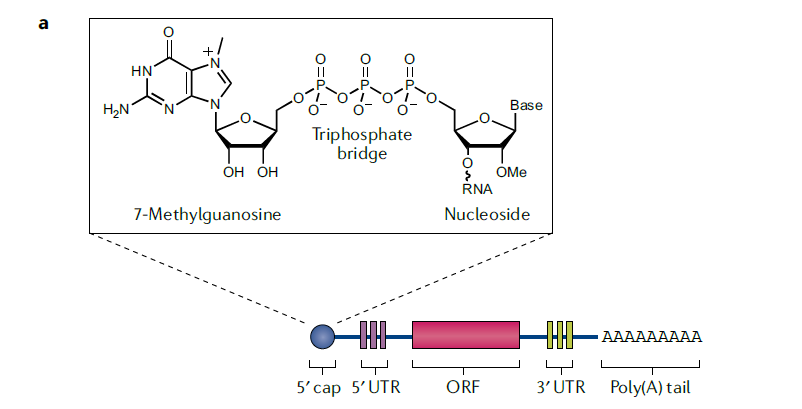
mRNA has five structural regions: 5' cap, 5' untranslated region (UTR) , open reading frame (ORF) , 3' UTR, and poly(A) tail. Sequence optimization includes codon optimization, 5' UTR selection, and 3' UTR selection—with codon optimization being the simplest.
The 20 common amino acids are encoded by 64
codons (with 3 stop codons). This means multiple codons encode the same amino
acid—these are called synonymous codons. Different organisms and
cell types have different codon usage frequencies—each has its own
"preference." High-frequency ("optimal") codons correspond
to high-abundance tRNAs. Replacing low-frequency rare codons with
high-frequency common codons significantly improves mRNA stability and protein
expression efficiency.
Beyond codon optimization, mRNA
secondary structure has become another key direction. More stable
secondary structures correlate with longer half-life and higher protein yield.
However, finding an mRNA sequence with sufficiently stable secondary structure,
high translation efficiency, and optimal codon usage is far more complex than
ranking 108 heroes. With AI and high-throughput validation, new pathways for
mRNA sequence optimization are emerging.