Like Charlie Chaplin's Hat – Why mRNA Drugs Need a 5' Cap

mRNA—a bridge linking genetic information
to functional proteins—is a novel drug modality with both informational
(carrying genetic code) and functional (coding/non-coding RNA regulation)
characteristics. In mRNA drug development, in vitro modification is
critical. mRNA needs a proper 5' cap—like a well-fitted hat—to express stably
in vivo.
Mature mRNA has several key structural elements: 5' cap, 5' UTR, ORF, 3' UTR, and poly(A) tail. The 5' cap—a 7-methylguanosine (m7G) structure—was discovered in the 1970s. It is where ribosomes initiate protein translation. Natural mRNA has three cap types: Cap0, Cap1, and Cap2.
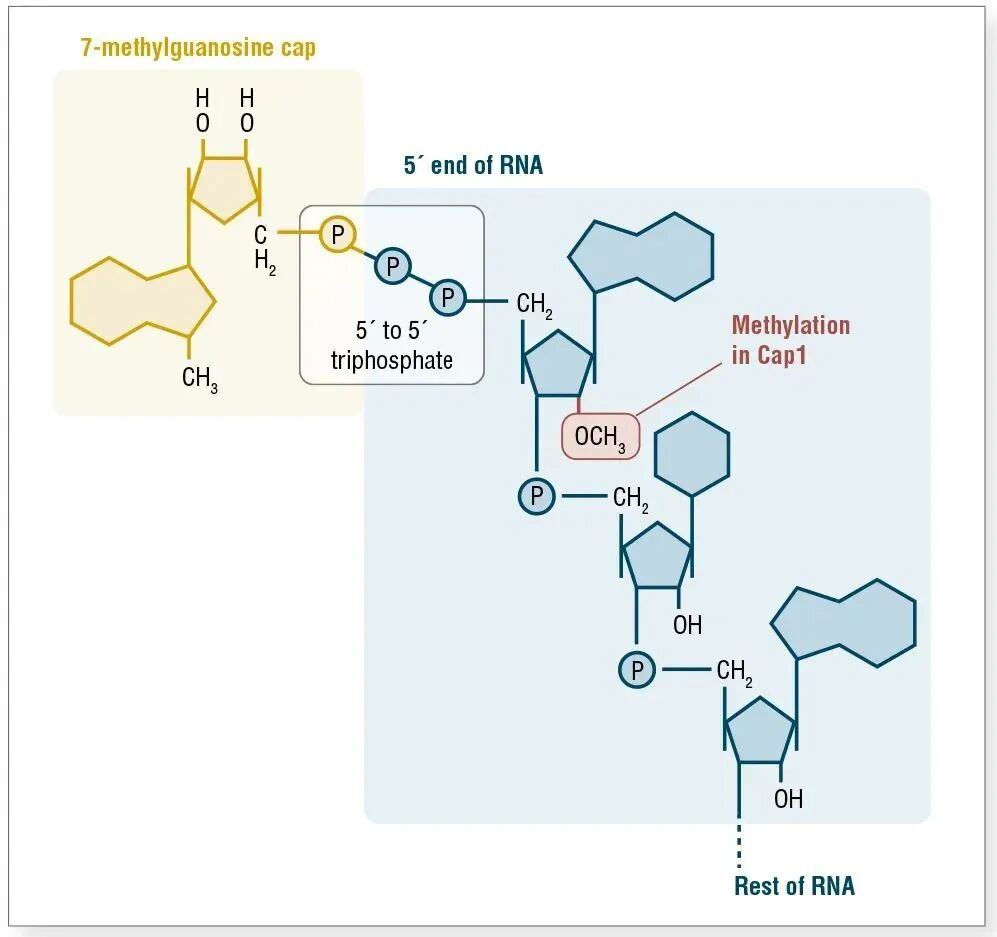
The 5' cap has two main functions: stabilizing
mRNA (protecting against exonuclease degradation) and facilitating
translation (helping ribosome recognition and binding). In
vitro-synthesized mRNA is generated by transcription from linearized plasmid
DNA, with capping and poly(A) tailing added at the end.
Capping is essential for translation
initiation, splicing, intracellular transport, and nuclear export. It provides
a signal for ribosome recognition, protects the 5' end from degradation,
participates in mRNA splicing, and ensures stable cytoplasmic transport.
Various capping methods exist—two-step capping and co-transcriptional capping.
As research on mRNA cap structure deepens, chemical modifications are
increasingly explored to enhance expression, translation efficiency, and
transfection efficiency.