
New Frontiers in Glioblastoma Immunotherapy – Survivin-Targeting Cancer Vaccines
The immune system's ability to recognize
and eliminate cancer cells depends on tumor antigens—molecular
markers that distinguish malignant cells from healthy tissue. These antigens
determine whether the immune system can mount a precise, sustained attack
without collateral damage. Glioblastoma Multiforme (GBM), one of
the most aggressive cancers, produces few detectable antigens and actively
evades immune surveillance, making it exceptionally difficult to treat.
Targeting Survivin—a protein that is almost exclusively expressed
in cancer cells—has emerged as a promising strategy to overcome this barrier.
I. Survivin: An Ideal Tumor Antigen
Spanning Multiple Cancers
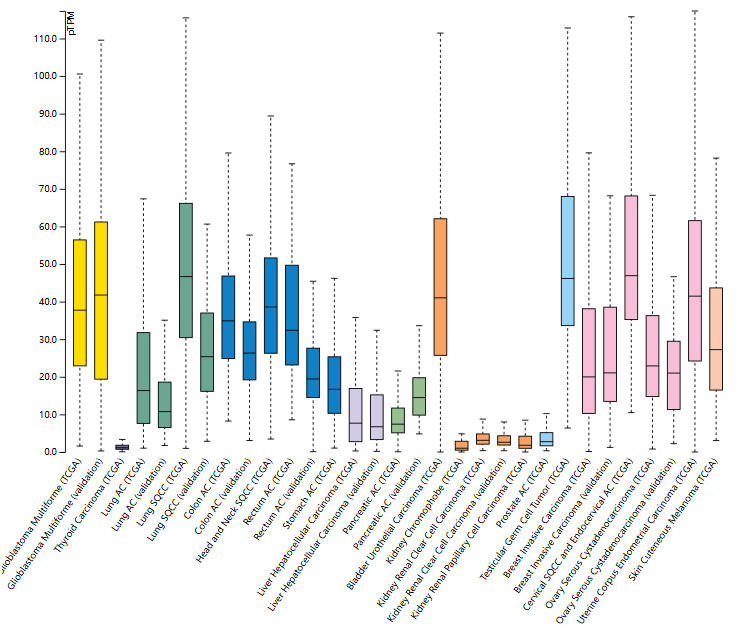
Survivin (also known as Baculoviral IAP Repeat Containing 5, BIRC5) is a protein that plays a critical role in inhibiting apoptosis and promoting cell proliferation. It is highly expressed in nearly all GBM cases—tricision's research shows expression in up to 93.88% of Chinese GBM patients[1]—and is also present across a wide range of malignancies, including gastric, bladder, prostate, lung, colorectal, pancreatic, breast, and ovarian cancers. Importantly, Survivin is virtually undetectable in normal adult tissues, making it an ideal target for precision immunotherapy with minimal off-tumor toxicity. Its expression levels are also closely correlated with tumor recurrence, drug resistance, and poor patient survival, further validating it as a clinically meaningful target.
II. The Intracellular Challenge: Why
Conventional Approaches Fall Short
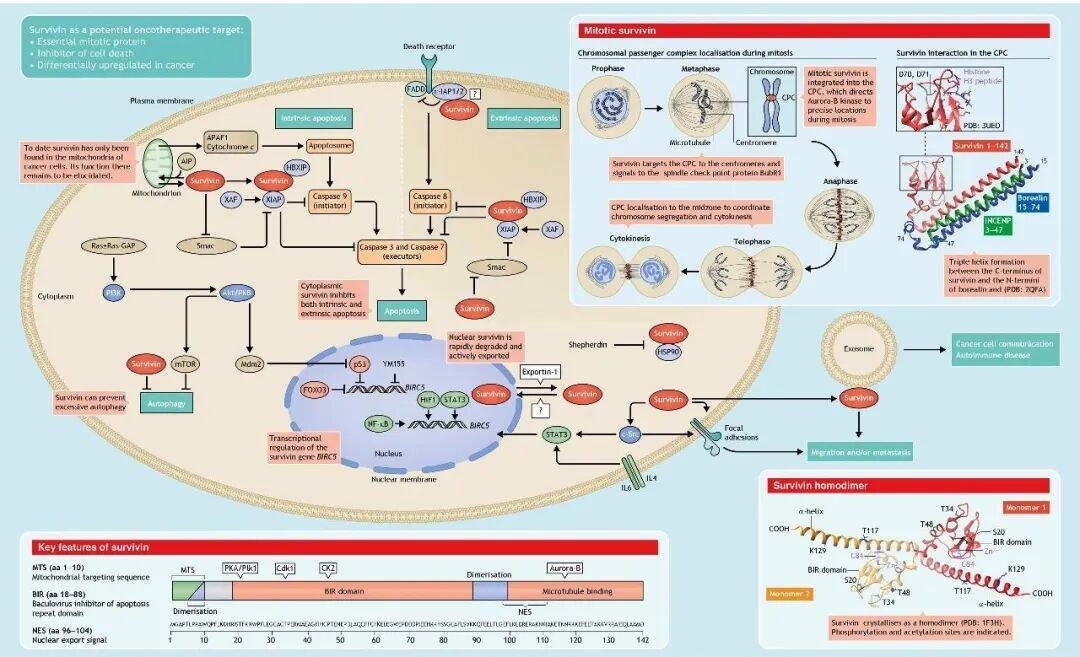
Most Tumor-Associated Antigens (TAAs), including Survivin, are located inside cancer cells—a compartment that is inaccessible to many popular immunotherapies such as Chimeric Antigen Receptor T Cells (CAR-T) and T-Cell Receptor-Engineered T Cells (TCR-T), which primarily recognize surface markers. The key to unlocking Survivin's potential lies in the fact that cancer cells break down intracellular proteins into peptide fragments and display them on the cell surface via Major Histocompatibility Complex Class I (MHC class I) molecules. CD8+ T cells can recognize these displayed fragments and destroy the presenting cells. Therefore, the goal is to develop vaccines that train the immune system to recognize and attack Survivin-derived peptides presented on MHC class I.
III. Dendritic Cell (DC) Vaccines: The
Precision Engine for T Cell Activation
Dendritic Cells (DCs) are the immune system's most potent antigen-presenting
cells—they act as both information processors and commanders of the adaptive
immune response. Survivin-targeting mRNA-DC vaccines leverage this natural
function through a three-step process:
- "Loading Intelligence": Messenger
RNA (mRNA) encoding the full Survivin protein is introduced into DCs.
- "Processing Information": The
DCs process Survivin into peptide fragments and display them on MHC class
I molecules.
- "Precision Training": These
antigen-loaded DCs are reinfused into the patient, where they activate and
expand Survivin-specific CD8+ T cells that can seek out
and destroy tumor cells expressing the antigen.
This approach elegantly overcomes the intracellular localization problem: the DCs act as a "translator" and "display case," exposing a hidden intracellular target to the immune system and enabling high-precision, low-collateral-damage anti-tumor activity.
IV. Global Landscape and tricision's
Clinical Translation
International efforts have demonstrated the
clinical promise of Survivin-targeted vaccines. For instance, the Phase IIa
study of SurVaxM—a Survivin-targeting peptide vaccine developed in the United
States—showed that when combined with chemotherapy, GBM patients
achieved a median Overall Survival (OS) of nearly 26 months, significantly
surpassing historical benchmarks[2]. SurVaxM has received Fast Track
designation from the U.S. Food and Drug Administration (FDA) and
is being investigated in additional tumor types.
In China, tricision is leading the charge.
Its "Survivin-Targeting DC Cell Injection" has
entered clinical development and is designed specifically for the Chinese
patient population, leveraging the high prevalence of Survivin expression
across GBM and multiple solid tumors—including gastric, lung, and breast
cancers. This positions the vaccine as a promising candidate for
multi-cancer application.
From target discovery to technology
translation, Survivin-targeting DC vaccines are opening a new
therapeutic frontier for GBM and other malignancies. As research
advances, the technology is expected to unlock its full potential across a
broader spectrum of cancer types.
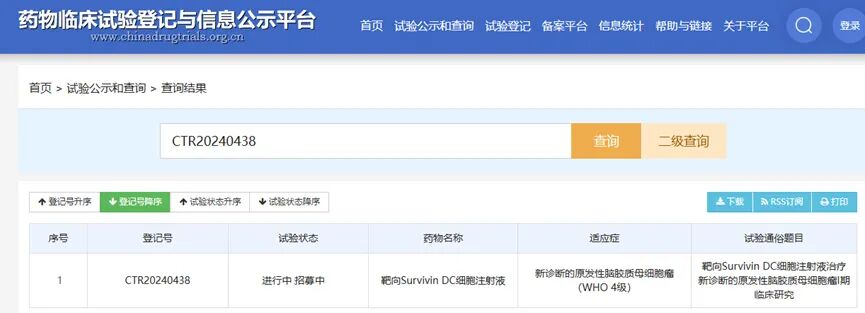
The Future is Within Reach: Beijing Tiantan Hospital is currently conducting a Phase I Clinical Trial (CT) of "Survivin-Targeting DC Cell Injection" in GBM patients (Clinical Trial Registration No.: CTR20240438). For inquiries, please contact: 15810449839, Manager Zhang.
References:
[1] A Multi-Element Expression Score Is A
Prognostic Factor In Glioblastoma Multiforme. Cancer Manag Res. 2019 Oct
17;11:8977-8989. doi: 10.21472
[2] Phase IIa Study of SurVaxM Plus
Adjuvant Temozolomide for Newly Diagnosed Glioblastoma. J Clin Oncol. 2023 Mar
1;41(7):1453-1465. doi: 10.1200/JCO.22.00996. Epub 2022 Dec 15. PMID: 36521103;
PMCID: PMC9995096.
About the Survivin-Targeting mRNA-DC
Tumor Vaccine
On January 10, 2023, tricision's mRNA-DC
vaccine for GBM—Survivin-Targeting DC Cell Injection—received Clinical
Trial Permission (CTP) from the National Medical Products
Administration (NMPA) (Approval No. 2023LP00065), making it the world's
first Survivin-targeting mRNA-DC therapeutic cancer vaccine to enter
clinical trials.
The therapy involves extracting a patient's
own DCs, loading them with mRNA encoding the Survivin antigen, and reinfusing
them to induce antigen-specific CD4+ and CD8+ T cell responses.
This approach is designed to eliminate residual tumor cells post-surgery,
prevent recurrence, and extend survival in primary GBM patients.
Published data confirm the vaccine's
efficacy: for glioma patients, median OS was 19 months in the
treatment group (n=5) versus 11 months in the control group
(n=28). For Small Cell Lung Cancer (SCLC) patients with brain
metastases, the respective figures were 17 months (n=5)
versus 7 months (n=13). One patient has been reported to have
an OS exceeding 60 months (5 years), with no Dose-Limiting
Toxicity (DLT) or treatment-related Adverse Events (AEs) observed
across the entire cohort.


Posts recommend
-
 Time:2026-07-10
 -
 Time:2026-07-10
 -
 Time:2026-07-10
 -