
"Opening a Pharmacy Inside Your Body" – How mRNA Technology Is Revolutionizing Drug Development

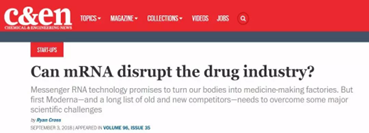
On April 18, 2022, Harvard Business Review published an article suggesting that mRNA technology could give rise to a new industry ecosystem, with profound implications for pharmaceutical innovation and drug development.

We know that proteins are closely linked to
disease—over 90% of human diseases are protein-related. Traditional
drugs mostly work by modulating protein function through small molecules or
biologics, requiring deep understanding of both disease mechanisms and the
molecules that can modify target proteins. mRNA-based drug development offers
a more direct and efficient approach: mRNA directly guides protein synthesis.
By designing and optimizing mRNA sequences and using different delivery
methods, cells can produce the required proteins on demand—enabling tasks such
as eliminating invading bacteria or viruses, clearing cancer cells, and
correcting abnormal protein expression.
In theory, mRNA can express any
protein, making it a highly promising candidate for treating virtually all
protein-based diseases and enabling precise, personalized treatment. Unlike
small-molecule chemical drugs or large-molecule biologics, mRNA is the "commander" that
directs cells to produce proteins. Developing mRNA therapeutics is akin to
drawing a blueprint for building a drug factory inside the human body—by
programming RNA sequences, cells become miniature drug manufacturing plants
capable of producing specific proteins with systemic therapeutic effects.
Compared with current therapies, mRNA
offers several inherent advantages: it does not enter the nucleus, does
not alter the genome, has only transient activity, and is degraded through
normal physiological metabolism. These attributes have earned mRNA
treatment the description "opening a pharmacy inside your
body," enabling the body to "heal itself."
Drug development is traditionally highly
specialized and customized—targeting one disease-specific molecule does not
apply to another. By building mRNA technology platforms that
enable shared R&D systems, development timelines can be shortened, costs
reduced, and efficiency improved—potentially driving a broader transformation
in pharmaceutical innovation.